Book Launch of From Washington to Beijing Marks a Significant Literary Occasion
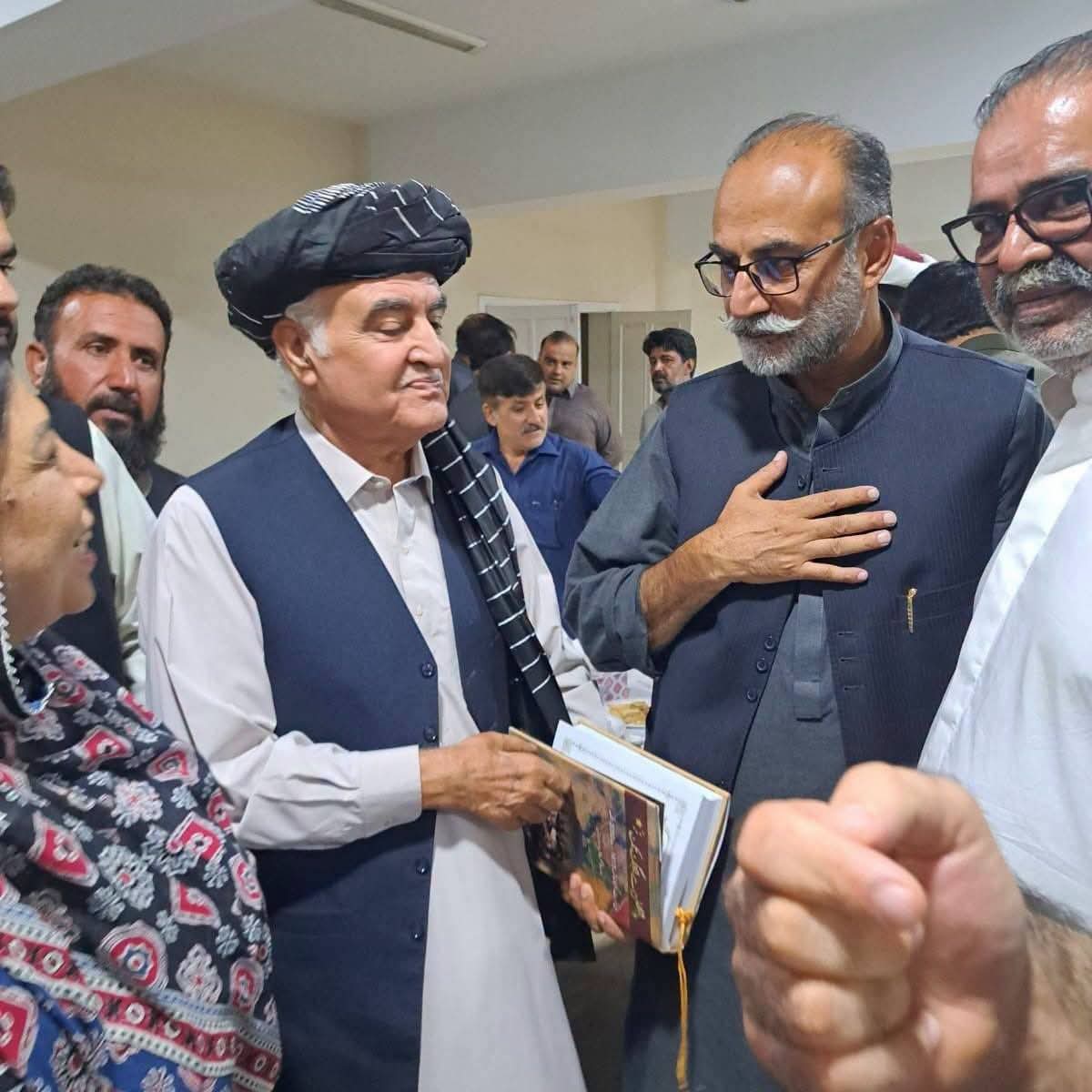
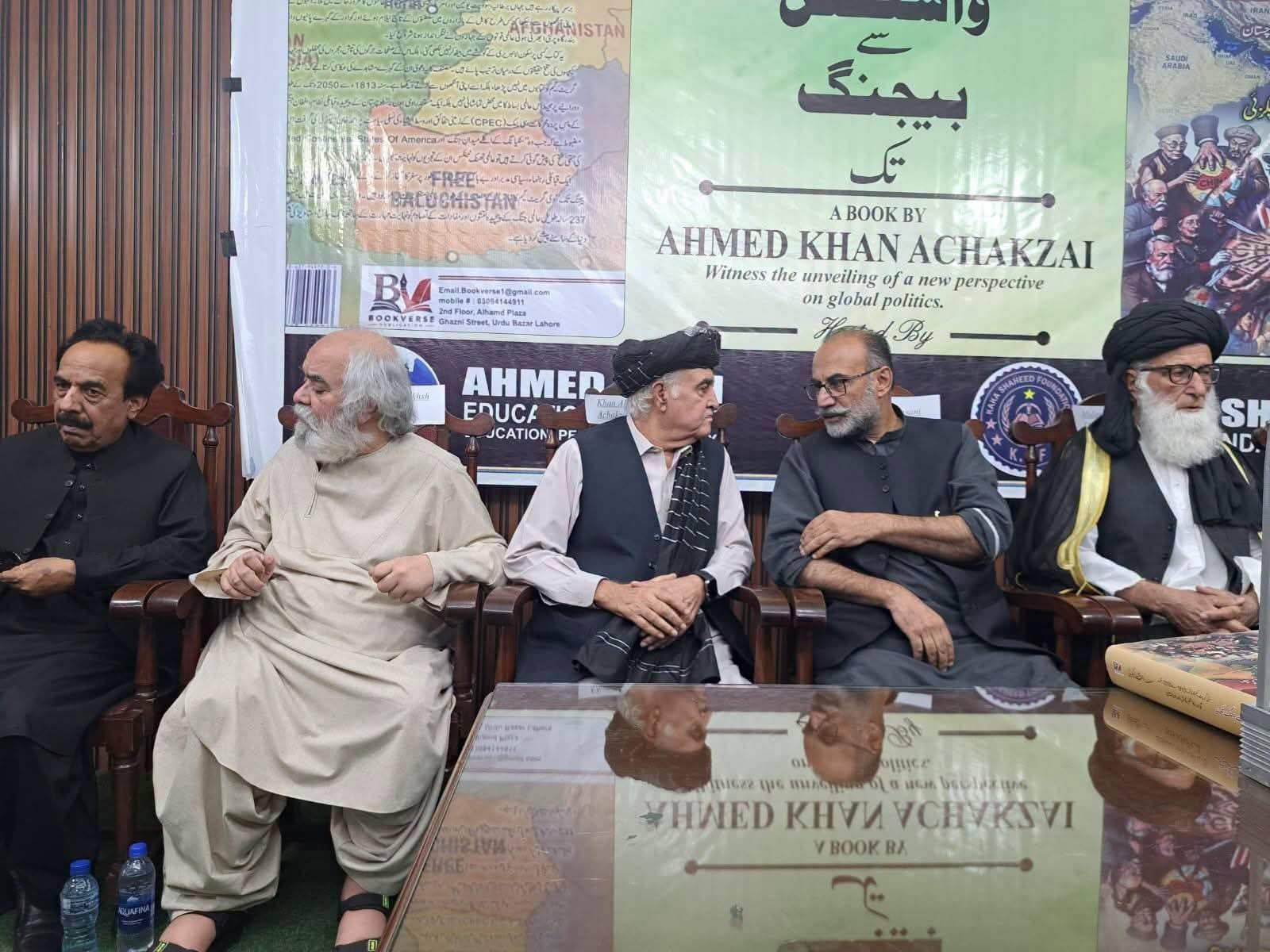
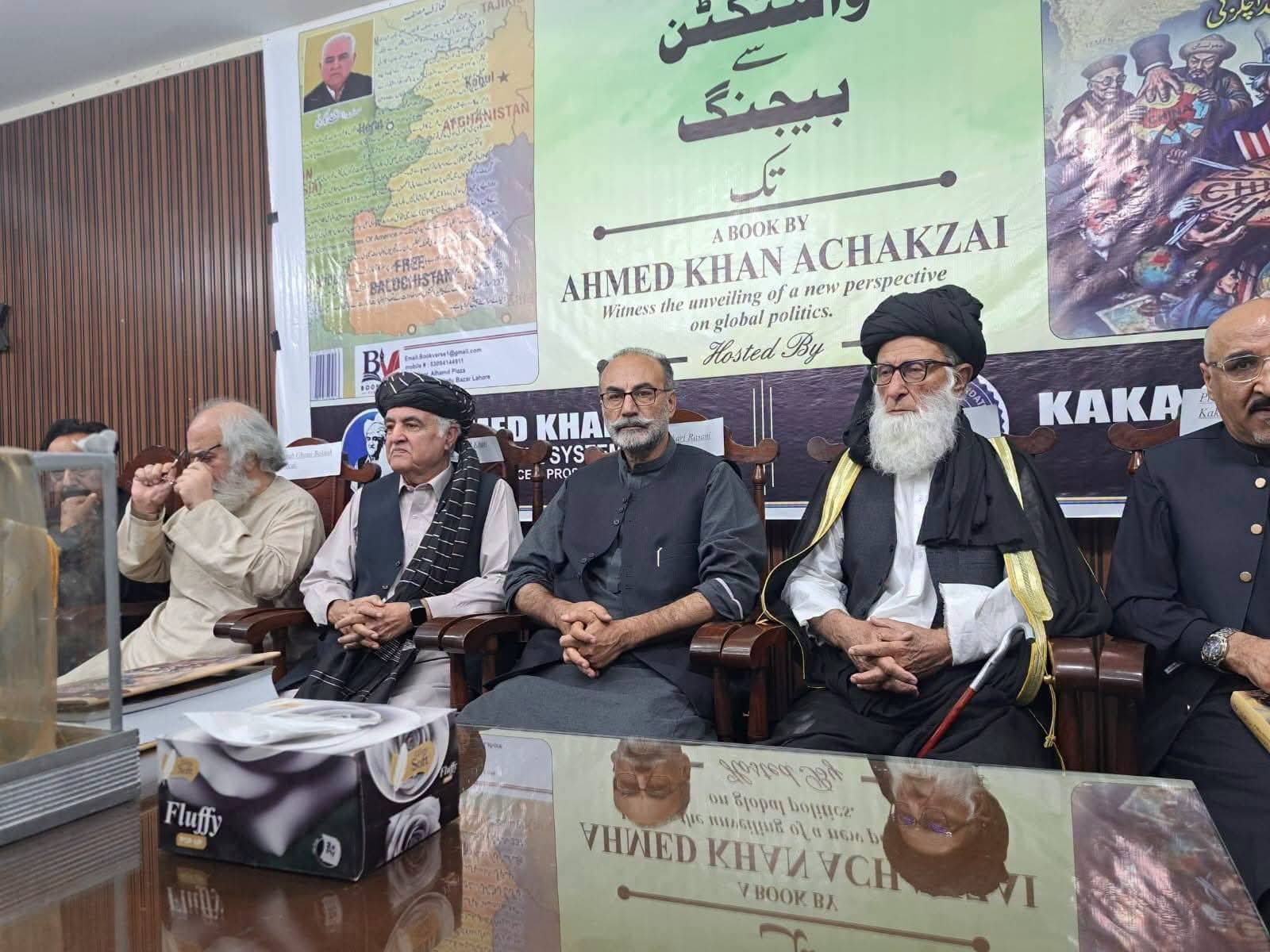
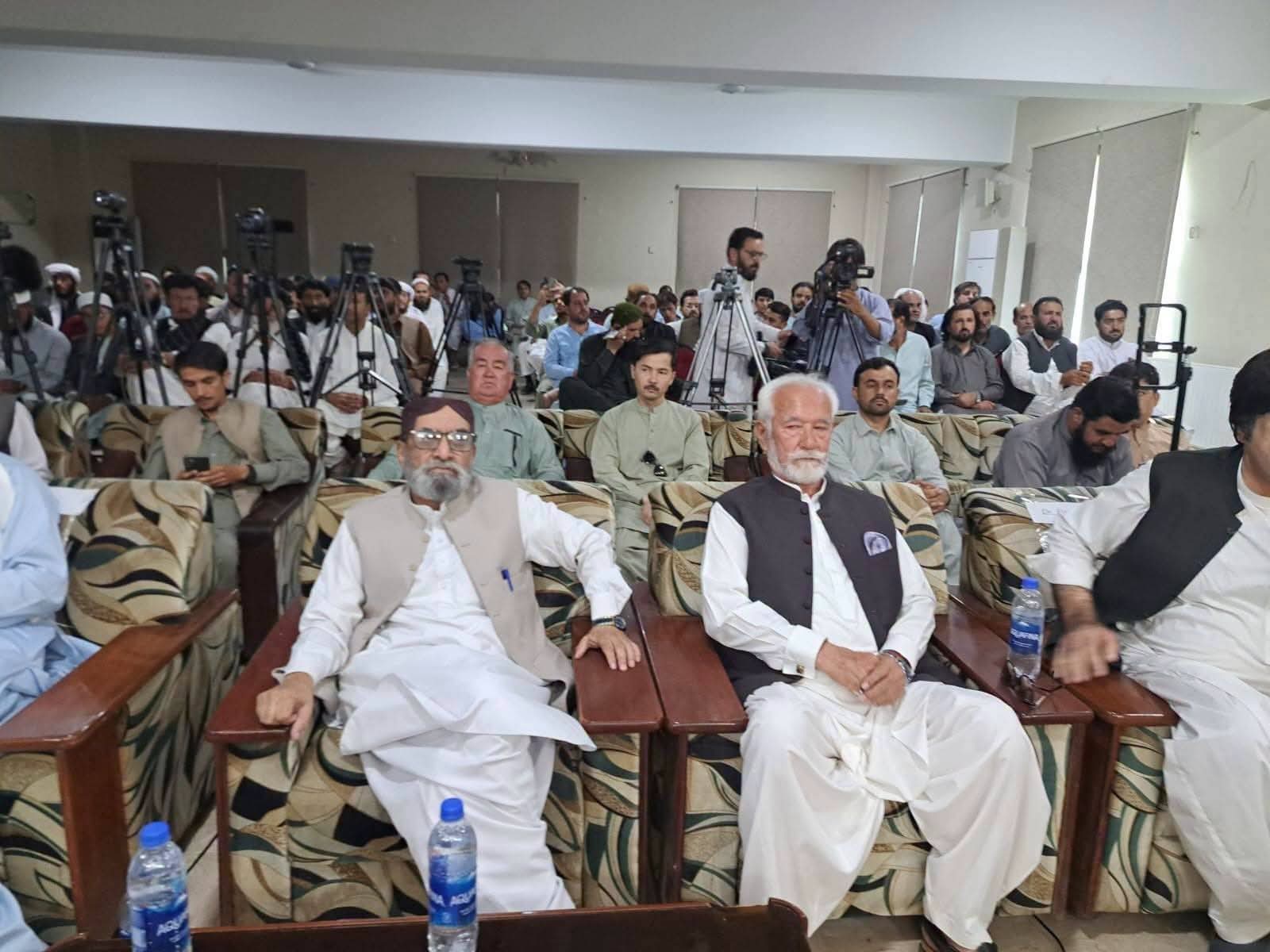
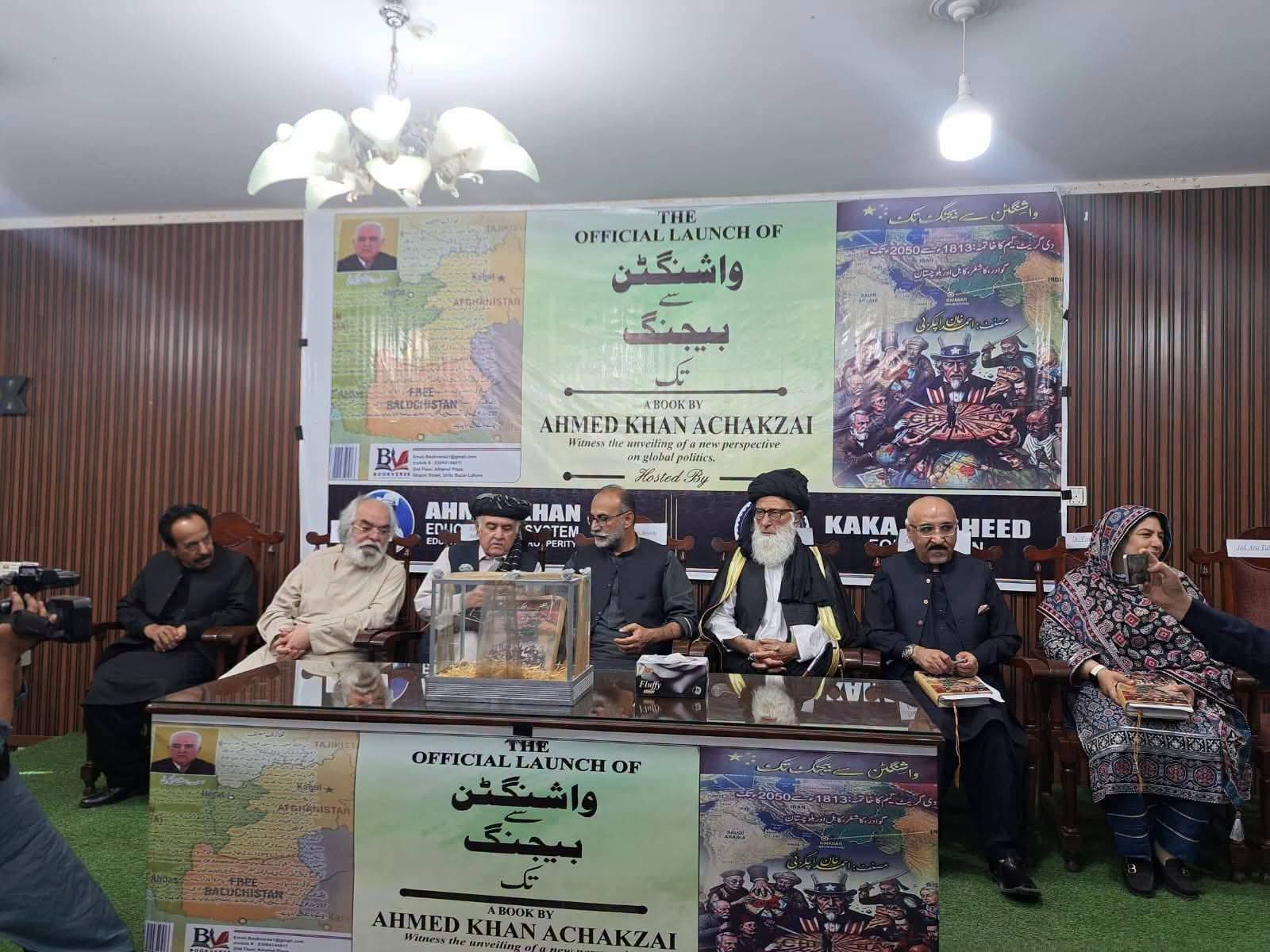
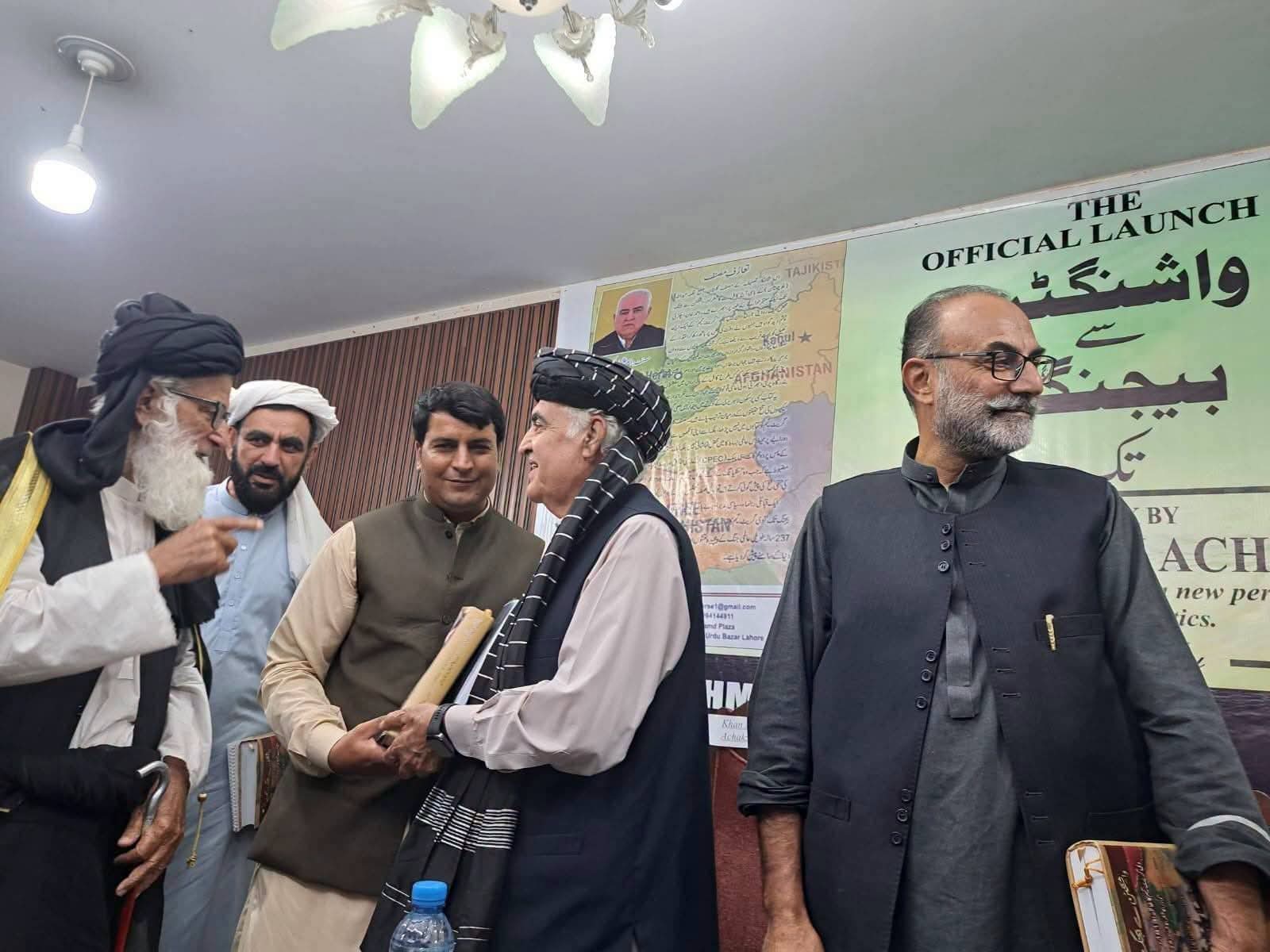
The official launch ceremony of From Washington to Beijing, authored by Mr. Ahmed Khan Achakzai, was held at the Quetta Press Club, attracting a large and distinguished audience from diverse sectors of society. The ceremony was attended by several prominent personalities, including Maulana Muhammad Khan Sherani, Haji Lashkari Raisani, Dr. Lal Muhammad Kakar, Nawab Ghaus Bakhsh Barozai, Abdul Mateen Akhundzada, as well as numerous other respected dignitaries.
Prominent tribal, political, and religious leaders of Balochistan stated that Pakistan was established as part of the “Great Game,” which, they argued, prevented the country from evolving into a peaceful and truly democratic state where citizens could freely elect their representatives. They emphasized that many of the country’s longstanding challenges remain unresolved and stressed the importance of promoting knowledge and intellectual discourse through literature. They further maintained that key state institutions, including Parliament and the judiciary, must be free from undue influence and domination.
These views were expressed by senior political leaders, including Nawabzada Haji Lashkari Khan Raisani, Sardar Ahmed Khan Ghaibzai, Maulana Muhammad Khan Sherani, former Caretaker Chief Minister Nawab Ghaus Bakhsh Barozai, Abdul Mateen Akhundzada, Professor Faiza Mir, Dr. Lal Muhammad Kakar, Jahan Ara Tabassum, and Ali Ahmed Baig, during the launch ceremony of Ahmed Khan Ghaibzai’s book, From Washington to Beijing, held on Saturday at the Quetta Press Club.
Among those present at the event were Dr. Fareed Agha, Humayun Aziz Kurd, Khan Wasey, Amanullah Kanrani Advocate, and several other distinguished guests.
The speakers noted that Ahmed Khan Ghaibzai had documented a 16,000-kilometre journey in his 600-page book. They remarked that anyone who disagreed with its contents was welcome to present a scholarly critique rather than dismissing the work outright.
They observed that political progress is driven by both knowledge and conviction, but argued that such intellectual growth has often been discouraged. They stressed that innovation and the pursuit of knowledge have historically been the foundations of national development.
Referring to Pakistan’s political and historical trajectory, the speakers claimed that the country was shaped within the framework of the “Great Game,” and asserted that this had prevented it from achieving lasting peace and sustainable development. They said that the nation had repeatedly been drawn into political, economic, and security crises, and called upon citizens to unite in pursuit of their constitutional rights and the resolution of public issues.
The speakers also referred to incidents of targeted killings in Karachi and Balochistan, expressing concern that many perpetrators had never been brought to justice. They argued that Balochistan had repeatedly been pushed into crises under the pretexts of religion or ethnicity and alleged that external geopolitical interests had contributed to the province’s instability.
They further stated that, despite more than 80 years, Balochistan’s fundamental issues remain unresolved. According to the speakers, the province’s challenges have often been misrepresented, with underdevelopment being unfairly attributed solely to tribal leaders. They criticised past administrative decisions, including changes to the Levies Force, and argued that effective law enforcement could have prevented many of the current difficulties.
Emphasising the importance of democratic participation, the speakers urged citizens to use the power of their vote to reject hereditary and patronage-based politics. They also contended that Pakistan’s Parliament and judiciary were not fully independent, arguing that genuinely autonomous institutions would ensure justice without prolonged legal proceedings.
Concluding the event, the speakers asserted that the state’s primary responsibility is to address the people’s problems and safeguard their rights. They criticised what they described as the dominance of vested interests over political parties and argued that meaningful change would only be possible through institutional reform, accountable governance, and a transformation in political culture. They concluded by stating that lasting progress requires both changes in leadership and a renewed commitment to public welfare and democratic principles.